Offer
Stories
/
CARE
CARE
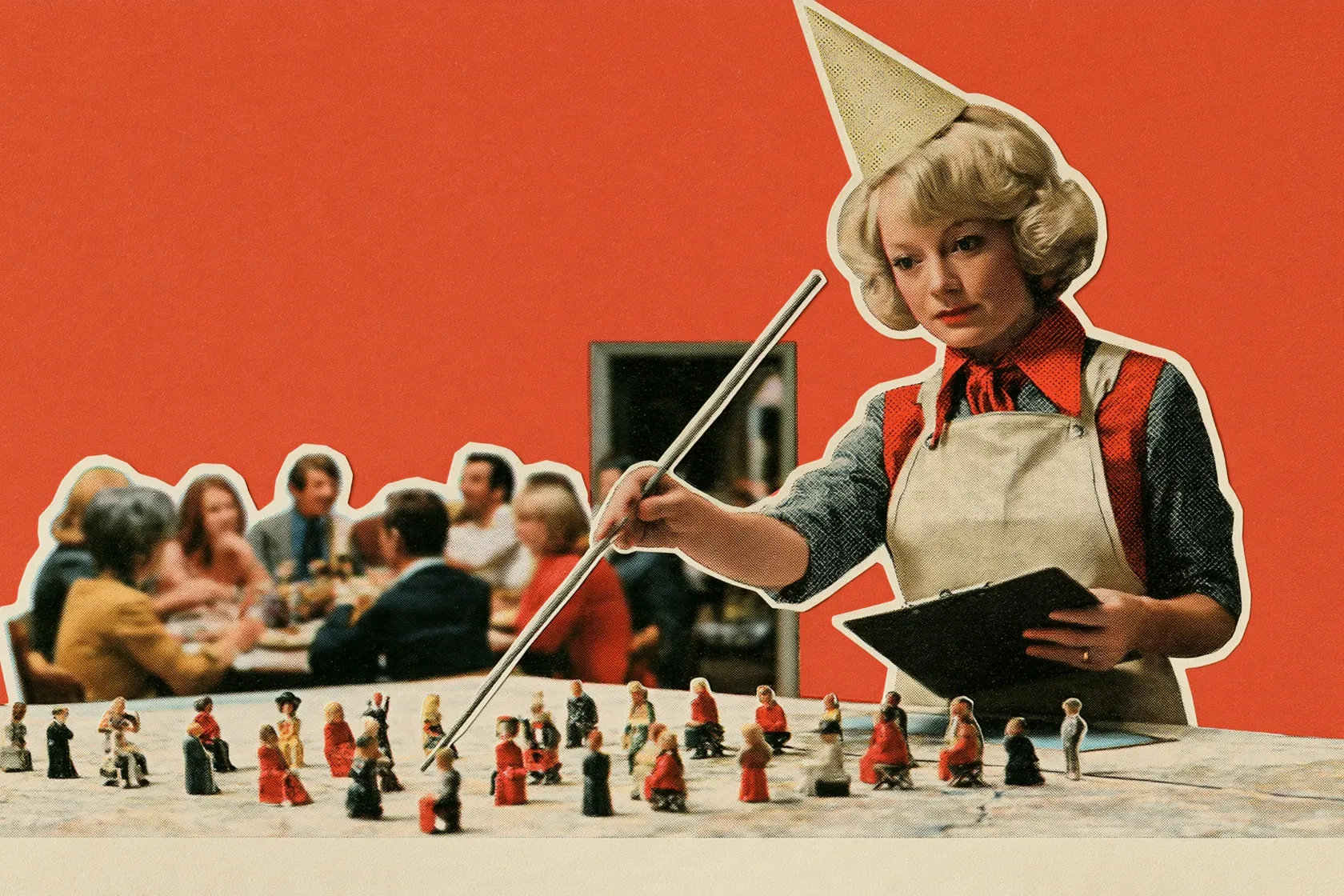
A seating plan is hospitality before anyone takes a bite. Conversations tend to top out at about four, so let the table have more than one.
Photograph by
Photographs by
1 / 1
·
Presented by
·
to
Orange Taco
·
The Highlight, 1200 McKinney St
Nothing is charged at booking. Inside 24 hours or a no-show, $30 a seat.
Serves
Prep
Cook
From the shop
Both
$0
About
You will need
$
ALLERGENS
·
$
·
Arrive
·
Code from your invitation
Menu
10% off the order. First online order only. One code per order. Online only.
February 28, 2027
October 12, 2026
ten-percent-first-order
Menu

A seating plan is hospitality before anyone takes a bite.
It costs nothing to think about who might enjoy sitting beside whom. But it can change how the evening begins: who has an easy way into the conversation, who finds something in common, who spends the first course waiting for an opening.
You do not need place cards. You need a little attention.
Research on freely forming conversations suggests that everyday exchanges tend to have an upper limit of about four participants. Add more people, and a single conversation often divides into smaller ones. That is a tendency, not a rule for every dinner table - but it is a reason not to expect eight guests to stay in one conversation all evening.
Let the table have more than one.
A story at one end. A quieter exchange at the other. Someone turning to the person beside them rather than trying to be heard across the room.
That is not a gathering coming apart. It is people finding their way into it.
So think about the nearest few seats, not just the whole guest list.
Who would give the newcomer a warm welcome? Who asks good questions? Who might discover a shared interest if you put them within speaking distance?
Do not automatically put the loudest guest beside the quietest. Quiet does not need correcting, and volume is not the same as generosity.
Choose someone who makes room.
Give the guest who knows no one at least one easy introduction. Not just two names, but a small connection:
“You both started gardening this year.”
“She’s just come back from the place you’re going.”
“I’ve been wanting you two to meet.”
Then let them decide where to take it.
Couples do not always have to sit together. They do not always have to be separated, either. A familiar person can make a new table easier; a different seat can open up a new conversation.
Think about the people, not the rule.
And remember that comfort comes before chemistry. Ask about seating needs rather than guessing. An easy place to hear, a chair that works, enough room to get up - none of that should be sacrificed for your idea of an interesting pairing.
Once people sit down, step back.
You have made an introduction, not assigned a task. They do not owe you the conversation you imagined.
Let a pause happen. Let someone listen. Let the subject change.
Pass the bread.
And sit down yourself.
The host does not have to keep every exchange alive from the kitchen. Choose food that lets you spend more of the evening at the table, rather than repeatedly leaving it.
We cook from scratch. You choose the people and give them somewhere comfortable to land. Pick up dinner, put it on plates, and let the meal belong to everyone - including you.
A good seating plan does not tell people what to say.
It gives them someone to say it to.
Order online and take 10% off your first order. Pick up dinner and give the hours to the people at the table.
THE FORMAT
who-sits-where
THE SPEC
Key
Value
Key
Value
Key
Value
Key
Value
Key
Value
PAIRS WITH THIS
Ingredients
Method
Steps
A common mistake